Alternatives to Gabapentin for Diabetic Neuropathy: An Evidence-Based Provider Guide
In brief
A review for providers on the limitations of gabapentinoids and the evidence for pharmacological and interventional alternatives for managing painful diabetic neuropathy.
Introduction: Reassessing First-Line PDN Management
For decades, gabapentinoids, particularly gabapentin and pregabalin, have been a cornerstone of first-line therapy for painful diabetic neuropathy (PDN). Their widespread use is rooted in established guidelines and extensive clinical experience. However, an overreliance on this single class of medication can obscure a significant clinical challenge: many patients experience inadequate pain relief, dose-limiting side effects, or other complications that necessitate a shift in strategy.
As our understanding of neuropathic pain mechanisms evolves, so too does our therapeutic armamentarium. A patient-centered approach requires a nuanced appreciation of not only the benefits but also the limitations of gabapentinoids.
This guide is intended for healthcare providers managing patients with PDN. It provides an evidence-based review of the clinical limitations associated with gabapentinoid therapy and explores a tiered approach to effective alternatives.
The Clinical Limitations of Gabapentinoids in PDN
While effective for some, gabapentinoids present several practical challenges in the management of PDN.
Efficacy Ceiling and Titration Challenges
A primary limitation is the variable and often incomplete efficacy of gabapentinoids. Published clinical evidence demonstrates that a significant number of patients report only partial pain relief, even at maximum tolerated doses. Compounding this issue is the requisite slow dose titration to mitigate central nervous system side effects. Many patients may discontinue therapy due to a perceived lack of efficacy before a therapeutic dose is ever reached.
Significant Adverse Event Profile
The most commonly reported adverse events include:
- Somnolence and Dizziness: These CNS effects can be debilitating, increasing fall risk and impairing daily functioning. In the older diabetic population with comorbidities, this risk is magnified.
- Peripheral Edema: Weight gain and fluid retention are common, which can exacerbate co-existing conditions like congestive heart failure or hypertension.
- Cognitive Effects: Patients may report fogginess, confusion, or difficulty with concentration, which impacts quality of life and adherence to complex diabetic management regimens.
Polypharmacy and Drug Interactions
Patients with diabetes and PDN are almost always managing multiple comorbidities, leading to polypharmacy. Adding a gabapentinoid increases the potential for cumulative sedative effects, especially when co-prescribed with opioids or benzodiazepines.
Emerging Concerns Regarding Misuse
There is a growing body of evidence regarding the potential for gabapentinoid misuse and abuse. Its potential to produce euphoric effects, particularly at high doses or when combined with other substances, has led to increased scrutiny and, in some states, reclassification as a scheduled drug.
Pharmacological Alternatives to Gabapentinoids
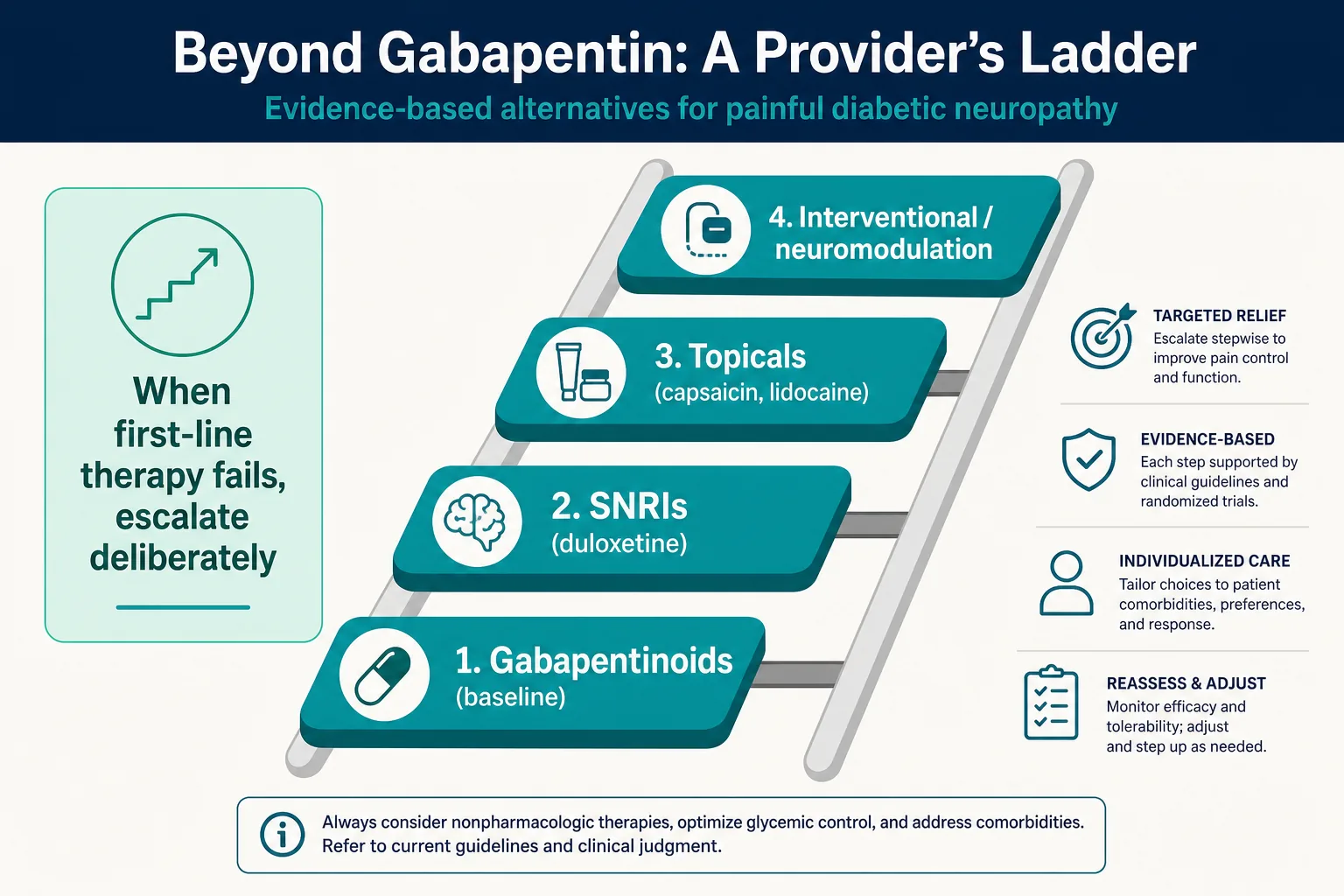
When gabapentinoids are ineffective or poorly tolerated, several other classes are recommended by clinical practice guidelines.
Serotonin-Norepinephrine Reuptake Inhibitors (SNRIs)
SNRIs, particularly duloxetine, are widely considered a first-line alternative or co-equal to gabapentinoids for PDN. Duloxetine is approved by the FDA for this indication.
- Mechanism: SNRIs work by increasing the levels of serotonin and norepinephrine in the synaptic cleft, strengthening descending inhibitory pain pathways.
- Efficacy and Dosing: Clinical studies have consistently shown the efficacy of duloxetine. The typical therapeutic dose is 60 mg per day, with simpler dosing than gabapentin titration.
- Considerations: Common side effects include nausea, dry mouth, constipation, and somnolence. SNRIs require monitoring of blood pressure.
Tricyclic Antidepressants (TCAs)
TCAs are one of the oldest and most studied classes of medication for neuropathic pain. Amitriptyline is the most studied for PDN, but secondary amines like nortriptyline and desipramine are often preferred as they are generally better tolerated. Significant anticholinergic side effects, antihistaminic effects, and potential for cardiotoxicity make TCAs a challenging choice for older adults or patients with cardiac disease.
Topical Agents
For patients with localized pain or those who wish to avoid systemic side effects, topical agents can be a valuable option.
- High-Concentration Capsaicin Patch (8%): A provider-administered therapy that causes reversible defunctionalization of nociceptors, leading to sustained pain relief for up to three months after a single application.
- Lidocaine Patch 5%: May offer mild to moderate relief for some patients with localized allodynia, with a very favorable safety profile.
Interventional and Advanced Therapies
For patients with refractory PDN who have failed multiple pharmacological approaches, interventional treatments offer another tier of care.
Spinal Cord Stimulation (SCS)
SCS involves the implantation of electrodes in the epidural space to deliver electrical impulses that disrupt pain signals. It is well-established for refractory PDN. However, SCS requires a permanently implanted generator and carries risks such as infection, lead migration, and hardware failure.
Peripheral Nerve Stimulation (PNS)
PNS offers a more targeted approach by placing leads near the specific peripheral nerves responsible for the patient's pain, such as the sural, peroneal, or tibial nerves in the lower extremity. This approach avoids the systemic side effects of oral medications and the more extensive surgery of SCS.
A Minimally Invasive, Non-Opioid PNS Option: The NS100 System
Among the PNS options, the NS100 by NeuroDynamics Global represents a distinct approach. It is a minimally invasive, non-opioid peripheral nerve stimulation therapy designed specifically for patients with chronic nerve pain, including PDN.
The NS100 system is not a permanent implant. The therapy involves the percutaneous placement of an ultrathin lead near the target nerve under ultrasound guidance, performed in a clinical setting using only topical anesthesia. The lead is connected to a small, wearable external stimulator.
The patient undergoes a therapy course of approximately 20 days, during which the system delivers stimulation designed to retrain neural pathways and provide lasting pain relief. At the end of the treatment period, the lead is easily removed.
Published clinical evidence on this type of short-term PNS therapy has demonstrated its ability to provide significant and sustained pain reduction for many months after the treatment concludes. It offers a compelling alternative for patients who have not found success with pharmacological management.
Integrating Alternatives: Candidate Selection Considerations
Choosing the right alternative requires a comprehensive patient assessment:
- Treatment History: Has the patient failed one or more first-line oral medications?
- Pain Characteristics: Is the pain localized or diffuse? Localized pain may be highly amenable to topical agents or targeted PNS.
- Patient Comorbidities and Profile: Age, cardiovascular health, renal function, fall risk, and existing medications must guide the choice.
- Patient Preference and Goals: Engaging in shared decision-making is paramount.
Conclusion: A Personalized, Multimodal Strategy
The management of painful diabetic neuropathy is not a static field. While gabapentinoids remain a common starting point, their limitations demand that providers be proficient in the use of a wide range of alternatives. Therapies like the NS100 system offer a valuable, minimally invasive option for appropriate patients, providing a bridge between pharmacology and major surgery.
To learn more about the NS100 system for painful diabetic neuropathy, contact NeuroDynamics Global to learn more.
Important medical disclaimer. This content is for general informational and educational purposes only and is not medical advice, diagnosis, or treatment. It does not establish a physician–patient relationship. Always consult a qualified healthcare provider before starting, stopping, or changing any medication or therapy.
About NS100 by NeuroDynamics Global. NS100 is an FDA-cleared Class II peripheral nerve stimulation medical device for chronic pain associated with painful diabetic neuropathy. Use of NS100 requires evaluation and prescription by a qualified healthcare provider. As with any medical device, NS100 carries potential risks; your provider will review indications, contraindications, and possible side effects with you.
Results vary. Individual results and experiences vary from patient to patient. No specific outcome is guaranteed. Coverage and reimbursement are payer- and plan-specific.
Want to learn more?
Talk to your healthcare provider or contact NeuroDynamics Global today.