Neurowellness Wearables and Diabetic Nerve Pain: What Consumer EEG and Vagus-Nerve Devices Can (and Cannot) Do
In brief
Consumer neurowellness wearables — ear-EEG headbands, vagus-nerve stimulators like Pulsetto and Elemind — are having a mainstream moment in 2026. Here is a plain-language look at what they actually do, what the evidence shows for diabetic nerve pain, and where medical neuromodulation is a different category entirely.
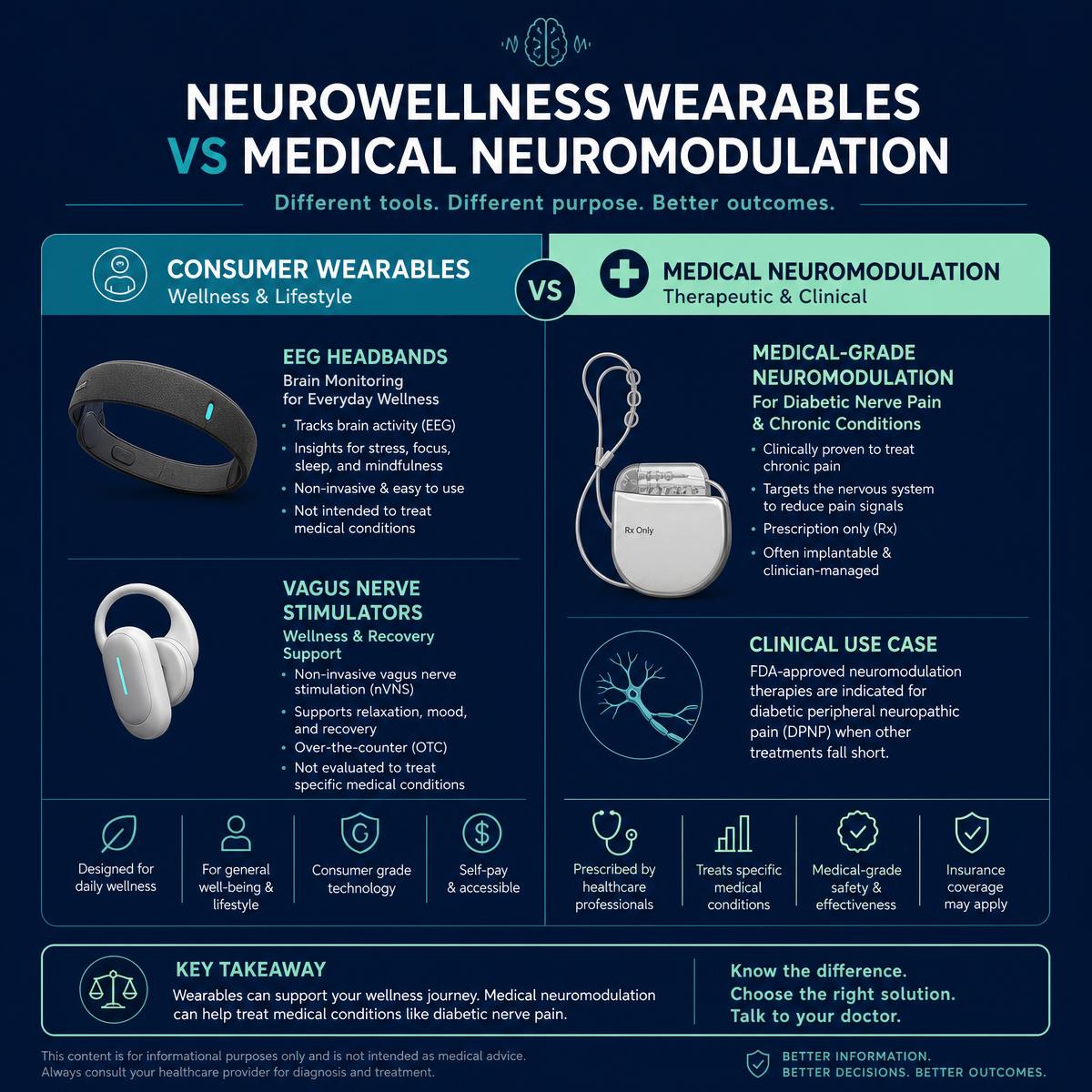
Neurowellness devices, consumer vagus-nerve stimulators (Pulsetto, Nurosym), sleep-focused EEG wearables (Elemind, ear-EEG), and general-purpose brain-sensing headbands are having a mainstream moment. If you live with painful diabetic neuropathy, it is a fair question to ask whether any of these devices can help. This article draws a clear line between consumer neurowellness gadgets and medical neuromodulation therapies designed for a specific condition. It is educational only and is not medical advice.
What "neurowellness" wearables actually are
Neurowellness is a marketing category, not a regulated medical category. It covers a growing group of consumer devices that either read brain activity (consumer EEG headbands, ear-EEG earbuds) or deliver low-level electrical or acoustic stimulation intended to promote relaxation, focus, or sleep. Examples include transcutaneous vagus-nerve stimulators worn on the ear or neck (Pulsetto, Nurosym), sleep-oriented EEG wearables such as Elemind, and various meditation and focus headbands.
These products are typically sold direct-to-consumer, do not require a prescription, and are marketed around wellness outcomes — stress, sleep quality, calm, focus — rather than around treating a specific diagnosed disease. That distinction matters a great deal when the question is nerve pain.
Related reading: [What is neuromodulation therapy?](/resources/what-is-neuromodulation-therapy)
Why people with diabetic nerve pain notice them
If you have painful diabetic neuropathy (PDN), you already know that pain, sleep, and stress feed each other. Nighttime burning and tingling disrupt sleep; poor sleep amplifies pain the next day; anxiety about the next flare tightens the cycle. So it is understandable that a headband advertised for "deeper sleep" or an ear-clip that promises to "calm the nervous system" looks appealing.
Related reading: [Nerve pain at night with diabetes](/resources/diabetic-nerve-pain-at-night-causes-solutions) and [Non-opioid pain relief for diabetic neuropathy](/resources/non-opioid-pain-relief-diabetic-neuropathy).
There is a reasonable, honest case that better sleep and lower baseline stress can make chronic pain more tolerable. That is not the same as treating the underlying nerve dysfunction.
What the evidence does and does not support
Two things can be true at once:
- Some consumer neurowellness devices have early, small studies suggesting they may help specific outcomes such as sleep onset or perceived stress in general populations.
- None of the mainstream consumer EEG or vagus-nerve wearables on the market today are FDA-cleared as a treatment for painful diabetic neuropathy.
Consumer transcutaneous vagus-nerve stimulators like Pulsetto and Nurosym are typically marketed for stress, sleep, and general wellbeing, not for diabetic nerve pain. Ear-EEG and sleep headbands such as Elemind are designed to sense brain activity or nudge sleep architecture, not to modulate peripheral nerves in the feet where PDN pain actually originates. Published clinical evidence for these devices in PDN specifically is sparse to nonexistent.
That does not make them useless. It does mean that if a device helps you sleep or unwind, treat that as a general quality-of-life benefit — not as disease-specific therapy for your neuropathy.
Consumer neurowellness vs. medical neuromodulation
This is the key distinction, and it is often blurred in advertising:
- **Consumer neurowellness wearables** are general-purpose devices, sold without a prescription, marketed around wellness outcomes, and typically not evaluated through the FDA pathways used for disease-specific therapies. Examples: Pulsetto, Nurosym, Elemind, ear-EEG earbuds, meditation headbands.
- **Medical neuromodulation** refers to clinician-directed therapies that use targeted electrical stimulation of specific nerves to treat a diagnosed condition, and that are evaluated through a formal regulatory pathway. Percutaneous peripheral nerve stimulation (PNS) for painful diabetic neuropathy is one example of this category.
NS100 by NeuroDynamics Global sits firmly in the second category. It is a physician-directed, minimally invasive peripheral nerve stimulation therapy delivered as a defined 20-day protocol for painful diabetic neuropathy — not an over-the-counter device you buy online, and not a wellness gadget.
Related reading: [PNS vs TENS for diabetic neuropathy](/resources/pns-vs-tens) and [NS100 therapy](/ns100).
How to think about it if you have PDN
A few practical points if consumer neurowellness devices are on your radar:
1. **Match the tool to the problem.** A vagus-nerve ear clip designed for stress is not designed to change how the small sensory nerves in your feet transmit pain. Expect general benefits, not condition-specific relief. 2. **Talk to your provider first if you have implants.** People with pacemakers, implanted defibrillators, or other electronic implants should confirm any electrical wearable is safe before using it. This applies to TENS units and consumer neurostimulators alike. 3. **Watch for wellness-washing.** If a product page implies neuropathy relief without naming an FDA clearance for that use, take that as marketing, not evidence. 4. **Do not delay evaluation for real nerve pain.** If burning, tingling, or shooting pain in your feet is disrupting your sleep or daily life, that is a signal to see a clinician — not to keep upgrading consumer gadgets.
Related reading: [Am I a candidate for NS100?](/am-i-a-candidate)
The bottom line
Consumer neurowellness wearables can be useful tools for sleep and stress in the general population, and by extension may help some people with chronic pain feel a little better rested and a little less on edge. But an ear-EEG headband or a wellness-grade vagus-nerve clip is not the same category of intervention as physician-directed peripheral nerve stimulation for a diagnosed condition. If oral medications like gabapentin, TENS units, or consumer neurowellness devices are not giving you the relief you need for painful diabetic neuropathy, talk with your healthcare provider about whether a medical neuromodulation option such as NS100 by NeuroDynamics Global may be appropriate for you.
Related resource: [TENS units and diabetic neuropathy: what they do, their limits, and when to consider medical neuromodulation](/resources/tens-units-diabetic-neuropathy).
Frequently asked questions
- Do consumer EEG or vagus-nerve wearables treat diabetic neuropathy?
- No. Consumer neurowellness wearables such as Pulsetto, Nurosym, and Elemind are marketed for general wellness goals like stress, sleep, and relaxation. They are not FDA-cleared to diagnose or treat painful diabetic neuropathy, and there is no high-quality clinical evidence showing they reduce diabetic nerve pain. Any decision about diabetic neuropathy treatment should be made with a qualified clinician.
- What is the difference between neurowellness wearables and medical neuromodulation?
- Neurowellness wearables are consumer devices sold direct-to-consumer for general wellness and are not held to the same regulatory standard as medical devices. Medical neuromodulation, such as FDA-cleared peripheral nerve stimulation, is prescribed and delivered by trained clinicians and is indicated for chronic pain associated with painful diabetic neuropathy. Treatment schedule, electrode placement, removal and follow-up depend on the specific device and prescription; the treating clinician should explain the current device labeling and care plan.
- Are ear-EEG or vagus-nerve stimulation devices safe to use if I have diabetic neuropathy?
- Consumer wearables are generally low-risk for healthy adults using them as directed, but they have not been studied specifically in people with painful diabetic neuropathy and are not a substitute for medical care. If you have diabetes, cardiovascular disease, an implanted device such as a pacemaker, or you are considering any nerve-stimulation product, talk with your clinician before using it.
Important medical disclaimer. This content is for general informational and educational purposes only and is not medical advice, diagnosis, or treatment. It does not establish a physician–patient relationship. Always consult a qualified healthcare provider before starting, stopping, or changing any medication or therapy.
About NS100 by NeuroDynamics Global. NS100 is an FDA-cleared Class II peripheral nerve stimulation medical device for chronic pain associated with painful diabetic neuropathy. Use of NS100 requires evaluation and prescription by a qualified healthcare provider. As with any medical device, NS100 carries potential risks; your provider will review indications, contraindications, and possible side effects with you.
Results vary. Individual results and experiences vary from patient to patient. No specific outcome is guaranteed. Coverage and reimbursement are payer- and plan-specific.
Want to learn more?
Talk to your healthcare provider or contact NeuroDynamics Global today.