Alternatives to Gabapentin for Diabetic Neuropathy: A Patient Guide
In brief
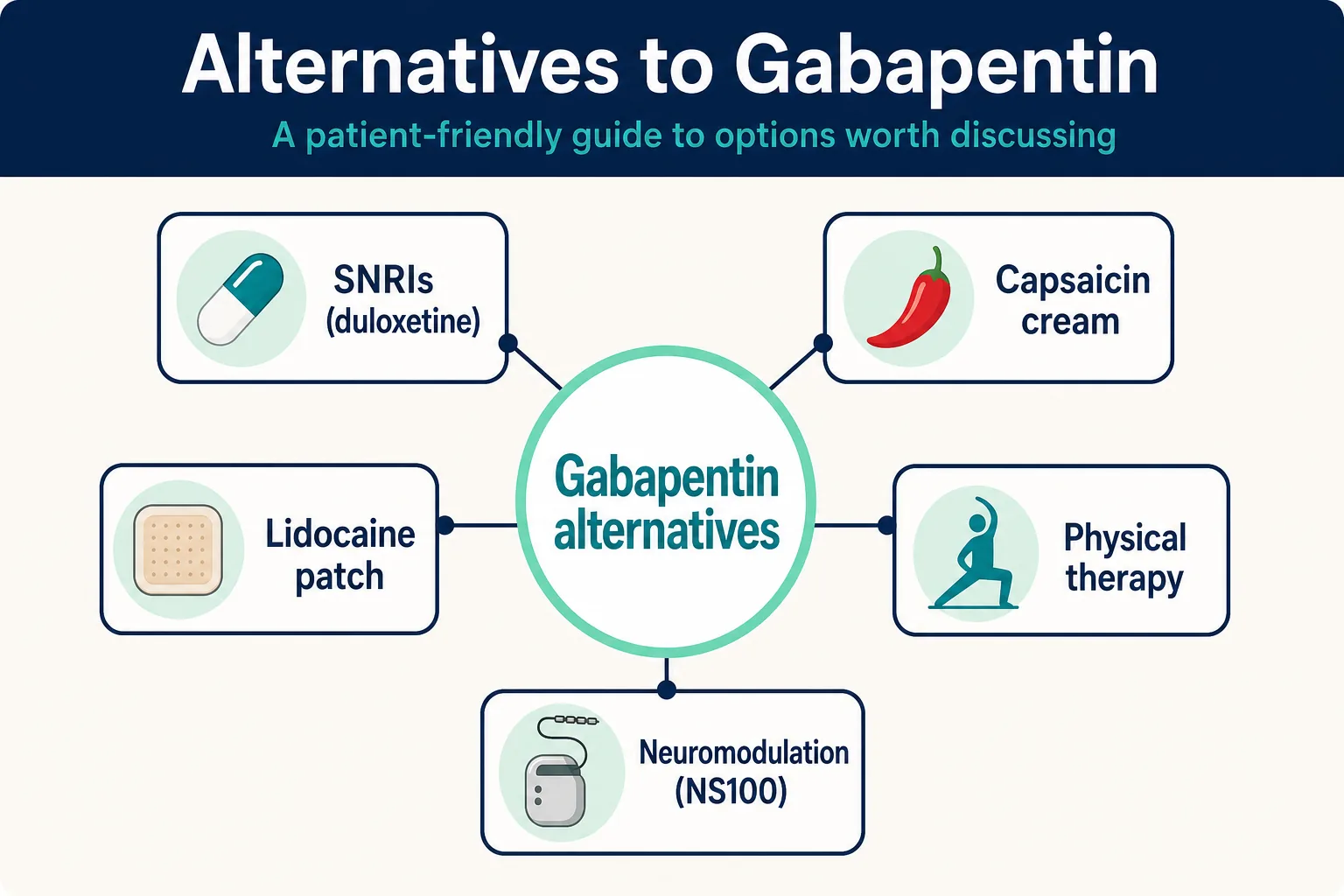
Answer first: the most commonly considered alternatives to gabapentin for painful diabetic neuropathy fall into four groups - (1) SNRIs such as duloxetine, (2) tricyclic antidepressants (TCAs) such as amitriptyline or nortriptyline, (3) topical therapies such as capsaicin 8% patches and lidocaine, and (4) neuromodulation, including FDA-cleared peripheral nerve stimulation. Each has different benefits, side-effect profiles, and monitoring needs. This physician-reviewed patient guide walks through what each option does, common tradeoffs, and questions to bring to your clinician.
Why patients ask about alternatives
Gabapentin is often the first medication prescribed for painful diabetic neuropathy. It helps some patients, but a meaningful number stop taking it because of side effects (drowsiness, dizziness, weight gain, brain fog) or because it simply did not provide enough relief.
If that sounds like your experience, you are not alone — and there are real alternatives worth raising with your doctor.
Other oral medications
Pregabalin
A close relative of gabapentin with a similar mechanism but different dosing. Some patients tolerate it better; others have the same side effects.
Duloxetine
A serotonin-norepinephrine reuptake inhibitor (SNRI) that is FDA-approved for painful diabetic neuropathy. It can be a good fit for patients who also have depression or anxiety, but it has its own side-effect profile.
Tricyclic antidepressants (TCAs)
Older medications such as amitriptyline and nortriptyline are sometimes used at low doses for neuropathic pain. They can cause dry mouth, sedation, and other anticholinergic effects, particularly in older adults.
Topical options
High-concentration capsaicin patch
An in-office topical patch that may reduce pain over weeks to months. It is non-systemic, so it does not interact with oral medications the same way.
Lidocaine patches and creams
Lower-strength topical options that some patients use for localized pain.
Non-pharmacologic options
Physical therapy and exercise
Structured activity can help with balance, function, and overall well-being — important even if it does not directly reduce pain.
Behavioral strategies
Sleep hygiene, pacing, cognitive behavioral therapy for chronic pain, and stress management can all reduce the impact of pain on daily life.
Neuromodulation
When medications and topical therapies do not provide adequate relief, neuromodulation may be discussed. NS100 by NeuroDynamics Global is an FDA-cleared, minimally invasive 20-day peripheral nerve stimulation protocol for chronic pain associated with painful diabetic neuropathy. It is a non-opioid, non-pharmacologic option that does not involve a permanent implant. Learn more on the [NS100 therapy page](/ns100), see how PNS compares with permanent spinal cord stimulation on our [PNS vs. SCS page](/compare/pns-vs-scs), or take our short [candidate screener](/am-i-a-candidate).
What to bring to your next appointment
To get the most from a conversation about gabapentin alternatives, come prepared with:
- The dose of gabapentin you tried and how long you stayed on it
- The side effects you experienced
- How much pain relief you actually got, on a 0–10 scale
- How pain affects your sleep, mobility, and mood
- Any other medications you take (so your clinician can avoid interactions)
What to avoid
Opioids are not recommended as a long-term treatment for painful diabetic neuropathy. They are associated with limited benefit and significant risks in chronic non-cancer pain. If your current plan relies primarily on opioids, that is a good reason to ask about non-opioid alternatives.
Bottom line
Gabapentin is one option for diabetic nerve pain, not the only one. Other oral medications, topical therapies, behavioral strategies, and non-opioid neuromodulation may all be appropriate depending on your situation. A clear conversation with your clinician is the right place to start.
This article is educational and is not medical advice. Results vary. Always discuss diagnosis and treatment with your clinician.
Related reading
Frequently asked questions
- What can I take instead of gabapentin for nerve pain?
- Guideline-recommended alternatives for painful diabetic neuropathy include SNRIs such as duloxetine, tricyclic antidepressants such as amitriptyline or nortriptyline, pregabalin (a related but distinct medication), and topical therapies such as capsaicin 8% patches or lidocaine. When medications do not provide adequate relief, FDA-cleared peripheral nerve stimulation is a non-drug option to discuss with your clinician. Choice depends on your other medical conditions, medications, and side-effect tolerance, and should always be made with a qualified healthcare provider.
- Are there non-drug alternatives to gabapentin?
- Yes. Non-pharmacologic options include structured exercise and physical therapy, cognitive behavioral therapy for chronic pain, TENS units for temporary symptom relief, and neuromodulation therapies such as FDA-cleared peripheral nerve stimulation for adults with chronic pain associated with painful diabetic neuropathy. Treatment schedule, electrode placement, removal and follow-up depend on the specific device and prescription. Optimizing glycemic control and foot care remain foundational. Non-drug approaches are commonly used alongside - not instead of - medical management.
- Why do patients stop gabapentin?
- The most commonly reported reasons for discontinuing gabapentin are inadequate pain relief and side effects - most often dizziness, drowsiness, cognitive slowing ("brain fog"), peripheral edema, and weight gain. Dose-related sedation and fall risk are particular concerns in older adults. If gabapentin is not helping or is causing bothersome side effects, do not stop it abruptly; talk with your clinician about tapering and about which of the alternatives above may fit your situation.
Reviewed July 2026 by the NeuroDynamics Global Medical Affairs team (board-certified pain medicine physician, MD). Citations current as of July 2026.
Important medical disclaimer. This content is for general informational and educational purposes only and is not medical advice, diagnosis, or treatment. It does not establish a physician–patient relationship. Always consult a qualified healthcare provider before starting, stopping, or changing any medication or therapy.
About NS100 by NeuroDynamics Global. NS100 is an FDA-cleared Class II peripheral nerve stimulation medical device for chronic pain associated with painful diabetic neuropathy. Use of NS100 requires evaluation and prescription by a qualified healthcare provider. As with any medical device, NS100 carries potential risks; your provider will review indications, contraindications, and possible side effects with you.
Results vary. Individual results and experiences vary from patient to patient. No specific outcome is guaranteed. Coverage and reimbursement are payer- and plan-specific.
Want to learn more?
Talk to your healthcare provider or contact NeuroDynamics Global today.