What Is Neuromodulation? A Guide for Patients and Providers
In brief
Neuromodulation therapy uses electrical stimulation to help manage chronic pain. Learn how it works, who it's for, and how NeuroDynamics Global is making it accessible for diabetic neuropathy patients.
Understanding Neuromodulation
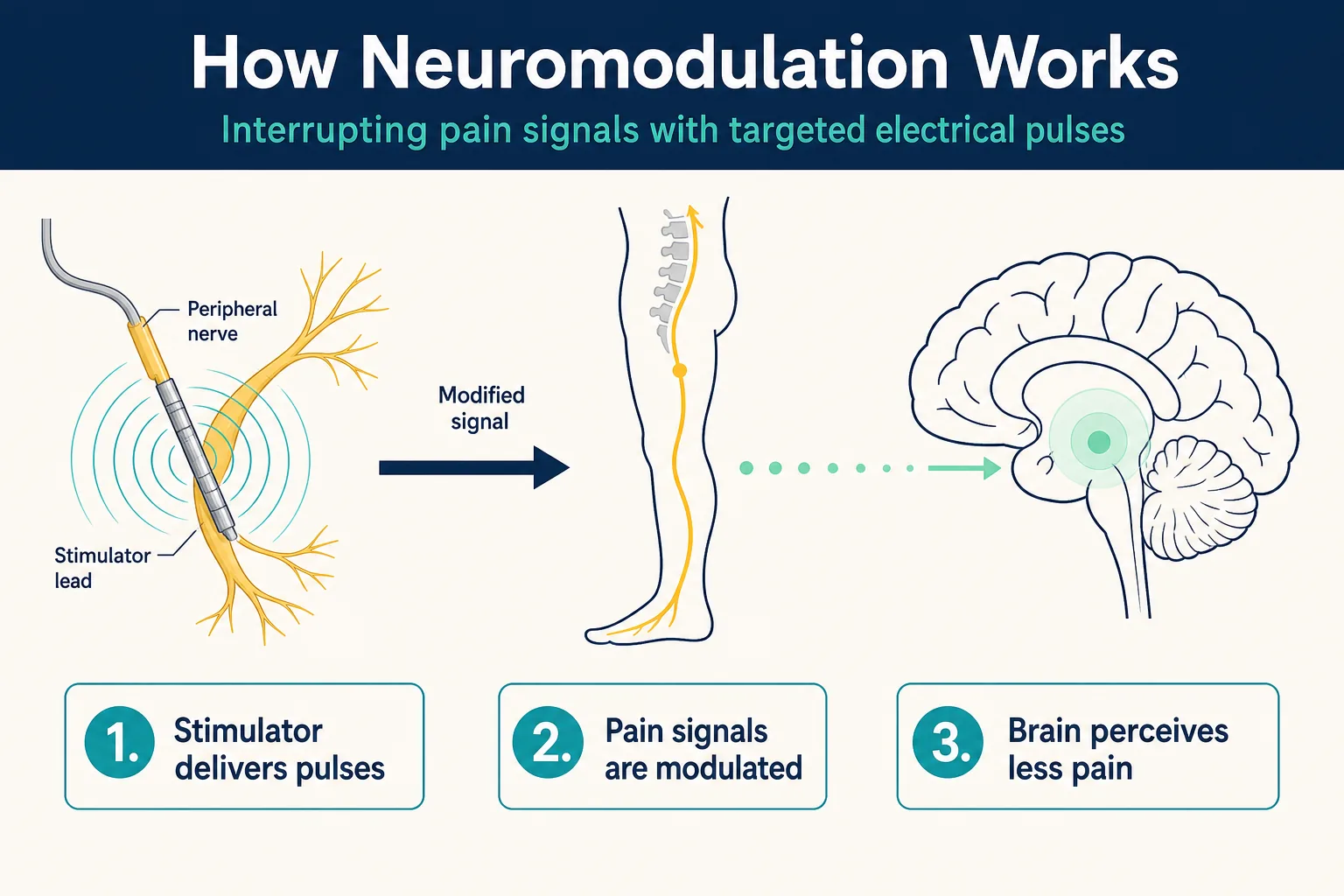
Neuromodulation is a technology-driven approach to pain management that uses electrical stimulation to alter nerve activity. By delivering targeted electrical signals to specific nerves, neuromodulation therapy can help modulate pain signaling pathways and reduce the perception of chronic pain.
How Does Neuromodulation Work?
The basic principle behind neuromodulation is the gate control theory of pain. Electrical stimulation can activate nerve fibers that effectively "close the gate" on pain signals traveling to the brain, reducing the intensity of pain experienced by the patient.
Types of Neuromodulation
- Spinal cord stimulation (SCS): Permanent implants that stimulate the spinal cord
- Peripheral nerve stimulation (PNS): Targets specific peripheral nerves closer to the source of pain
- Transcutaneous electrical nerve stimulation (TENS): External, non-invasive stimulation
NeuroDynamics Global: Peripheral Nerve Stimulation for PDN
NeuroDynamics Global offers an FDA-cleared Class II peripheral nerve stimulation device specifically designed for painful diabetic neuropathy. What makes it different:
Temporary, Not Permanent Unlike traditional spinal cord stimulators, the NeuroDynamics Global device is worn for just 20 days. There's no permanent implant — the device is placed in a simple in-office procedure and removed after the treatment period.
In-Office Procedure The procedure is performed by a trained healthcare provider in an outpatient setting. Most patients return to normal activities the same day.
Designed for Diabetic Neuropathy While other neuromodulation devices target various pain conditions, NeuroDynamics Global therapy is specifically designed for chronic pain associated with painful diabetic neuropathy.
Who Is a Candidate?
You may be a candidate for neuromodulation therapy if you:
- Have been diagnosed with diabetes
- Experience chronic foot pain due to diabetic neuropathy
- Have had pain for 3 or more months
- Haven't found adequate relief from other treatments
For Healthcare Providers
NeuroDynamics Global offers a turnkey provider program with:
- Comprehensive clinical training
- Dedicated clinical liaison support
- Revenue cycle management assistance
- Outcomes tracking tools
Contact NeuroDynamics Global to learn more about bringing neuromodulation therapy to your practice.
Results vary by patient. Coverage is payer- and patient-specific.
Important medical disclaimer. This content is for general informational and educational purposes only and is not medical advice, diagnosis, or treatment. It does not establish a physician–patient relationship. Always consult a qualified healthcare provider before starting, stopping, or changing any medication or therapy.
About NS100 by NeuroDynamics Global. NS100 is an FDA-cleared Class II peripheral nerve stimulation medical device for chronic pain associated with painful diabetic neuropathy. Use of NS100 requires evaluation and prescription by a qualified healthcare provider. As with any medical device, NS100 carries potential risks; your provider will review indications, contraindications, and possible side effects with you.
Results vary. Individual results and experiences vary from patient to patient. No specific outcome is guaranteed. Coverage and reimbursement are payer- and plan-specific.
Want to learn more?
Talk to your healthcare provider or contact NeuroDynamics Global today.