What Is Diabetic Neuropathy? Symptoms, Causes & Treatment Options
In brief
Diabetic neuropathy is nerve damage caused by chronically high blood sugar levels. Learn about the symptoms, causes, risk factors, and available treatment options including neuromodulation therapy.
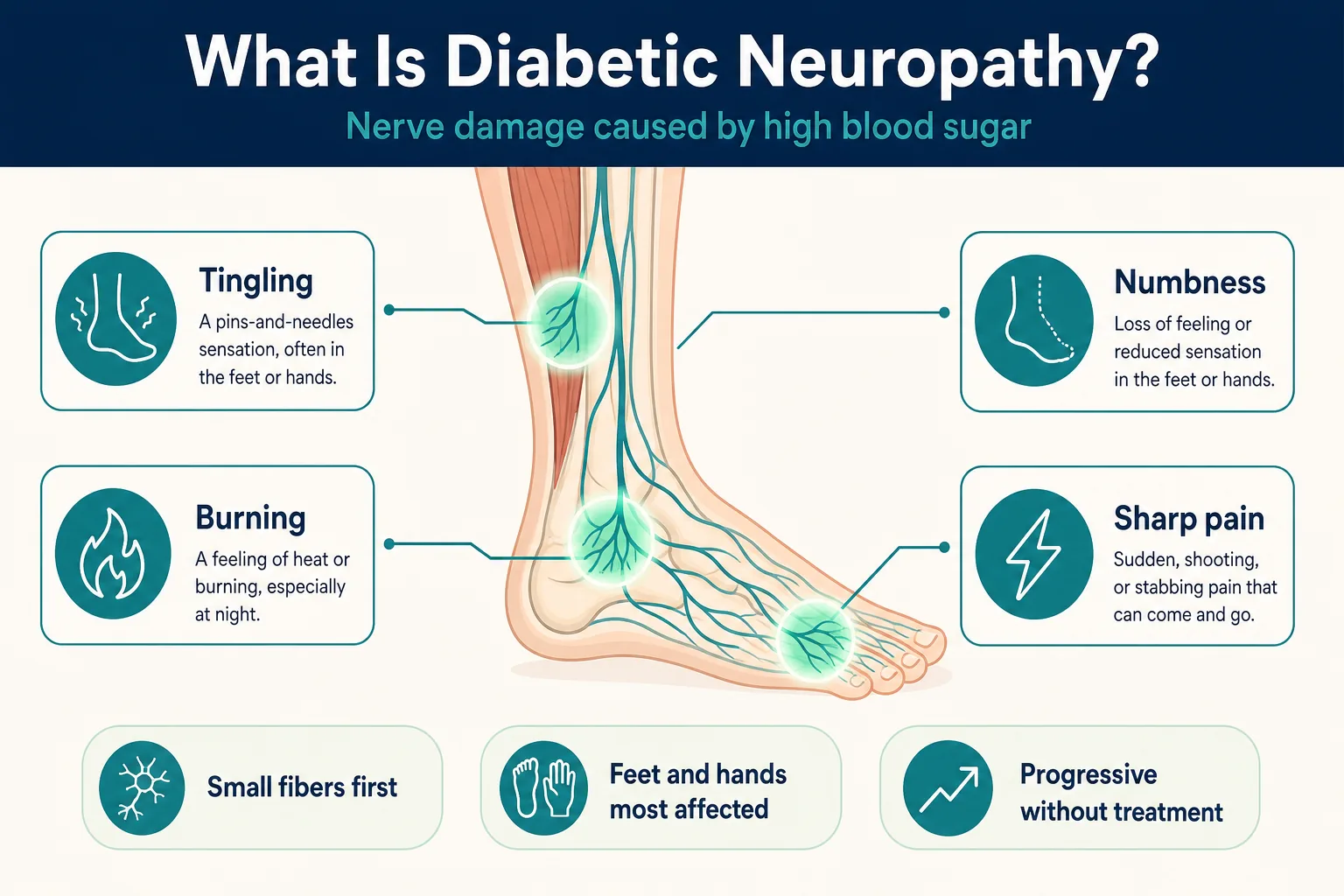
What Is Diabetic Neuropathy?
Diabetic neuropathy is a type of nerve damage that can occur in people living with diabetes. High blood sugar (glucose) levels over time can injure nerve fibers throughout the body, but diabetic neuropathy most often damages nerves in the legs and feet.
Depending on the affected nerves, diabetic neuropathy symptoms can range from pain and numbness in the legs and feet to problems with the digestive system, urinary tract, blood vessels, and heart.
Types of Diabetic Neuropathy
There are four main types of diabetic neuropathy:
- Peripheral neuropathy: The most common form, affecting the feet and legs first, then the hands and arms
- Autonomic neuropathy: Affects the nerves controlling internal organs
- Proximal neuropathy (diabetic polyradiculopathy): Affects nerves in the thighs, hips, or buttocks
- Mononeuropathy (focal neuropathy): Damage to a single specific nerve
Symptoms of Painful Diabetic Neuropathy (PDN)
Painful diabetic neuropathy specifically refers to neuropathy that causes chronic pain. Common symptoms include:
- Burning or tingling sensations in the feet
- Sharp, stabbing, or shooting pains
- Increased sensitivity to touch
- Numbness or reduced ability to feel temperature changes
- Muscle weakness or difficulty walking
- Sleep disruption due to nighttime pain
What Causes Diabetic Neuropathy?
The exact mechanism isn't fully understood, but several factors contribute:
- Chronically elevated blood sugar levels damage nerve fibers
- Inflammation in the nerves due to metabolic changes
- Genetic factors that may make some people more susceptible
- Duration of diabetes — the longer you have diabetes, the greater the risk
- Smoking and alcohol use can worsen nerve damage
Treatment Options for Diabetic Neuropathy
Treatment approaches include:
Blood Sugar Management Keeping blood sugar levels within target range is the foundation of preventing and managing diabetic neuropathy. Work with your healthcare team to optimize your diabetes management plan.
Medications Several types of medications may help manage neuropathic pain, including certain antidepressants, anti-seizure medications, and topical treatments. Your doctor can help determine the best approach for your situation.
Non-Opioid Alternatives Given concerns about opioid dependence, many patients and providers are seeking non-opioid pain management options. Neuromodulation therapy, such as that offered by NeuroDynamics Global, represents an FDA-cleared, drug-free approach to managing chronic neuropathic pain.
Neuromodulation Therapy NeuroDynamics Global offers an FDA-cleared neuromodulation device designed to help reduce chronic pain associated with painful diabetic neuropathy. The therapy involves a 20-day temporary protocol performed in-office, providing a non-invasive alternative to permanent implants.
When to See a Doctor
If you experience any symptoms of diabetic neuropathy — especially burning or tingling in your feet, wounds that won't heal, or difficulty walking — consult your healthcare provider promptly. Early intervention can help prevent progression and improve outcomes.
Results vary by patient. Talk to your healthcare provider to determine if NeuroDynamics Global therapy is right for you.
Important medical disclaimer. This content is for general informational and educational purposes only and is not medical advice, diagnosis, or treatment. It does not establish a physician–patient relationship. Always consult a qualified healthcare provider before starting, stopping, or changing any medication or therapy.
About NS100 by NeuroDynamics Global. NS100 is an FDA-cleared Class II peripheral nerve stimulation medical device for chronic pain associated with painful diabetic neuropathy. Use of NS100 requires evaluation and prescription by a qualified healthcare provider. As with any medical device, NS100 carries potential risks; your provider will review indications, contraindications, and possible side effects with you.
Results vary. Individual results and experiences vary from patient to patient. No specific outcome is guaranteed. Coverage and reimbursement are payer- and plan-specific.
Want to learn more?
Talk to your healthcare provider or contact NeuroDynamics Global today.