Living with Diabetic Foot Pain: Tips for Daily Management
In brief
Practical tips and strategies for managing daily life with diabetic neuropathy foot pain, from footwear choices to when to seek advanced treatment options.
Managing Diabetic Foot Pain Day to Day
Living with painful diabetic neuropathy can be challenging, but there are strategies that may help you manage symptoms and maintain quality of life. Here are practical tips from healthcare experts.
Foot Care Essentials
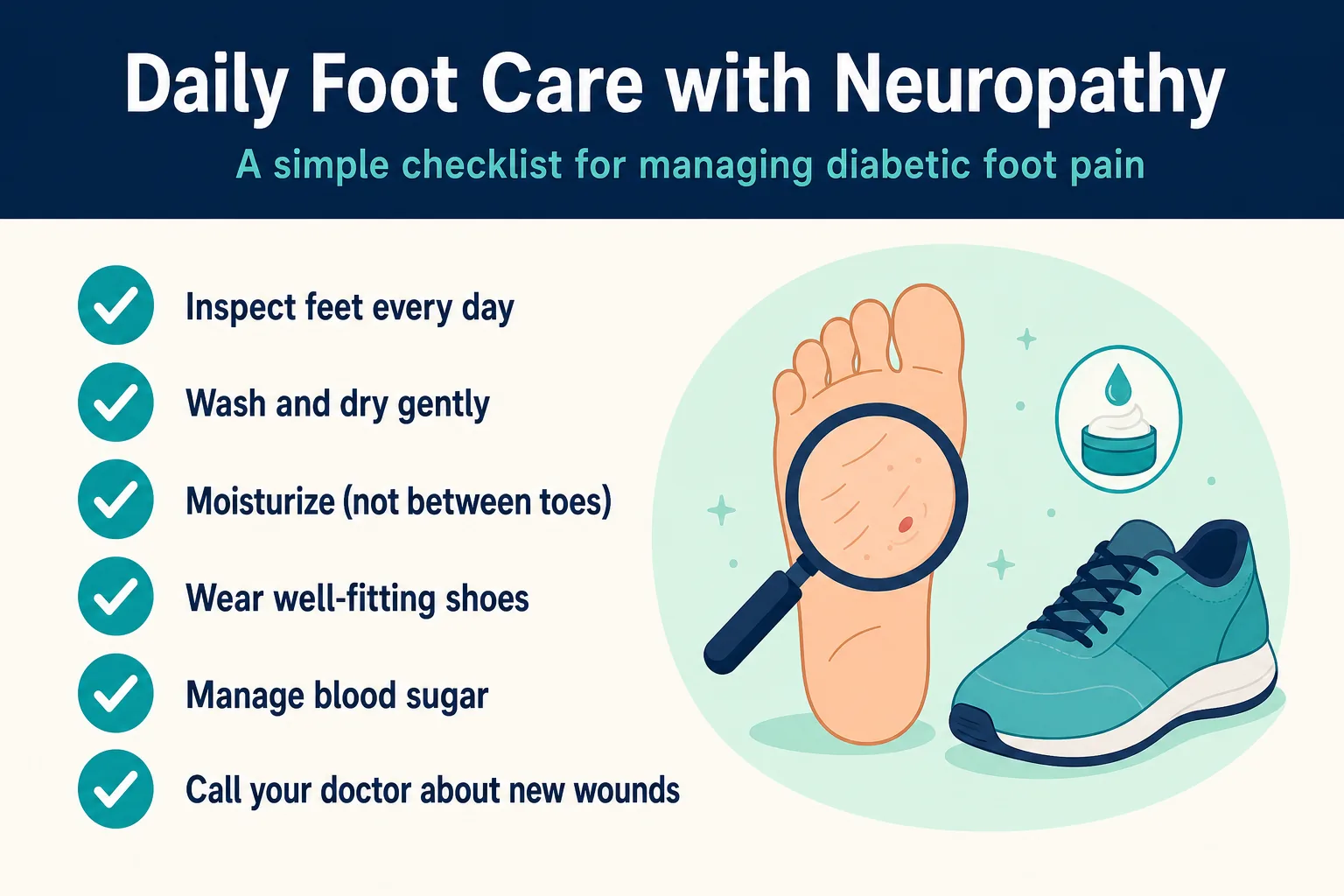
Daily Inspection Check your feet daily for cuts, blisters, redness, swelling, or nail problems. Nerve damage can reduce sensation, making it harder to notice injuries.
Proper Footwear - Wear well-fitting, supportive shoes at all times - Avoid going barefoot, even indoors - Choose shoes with wide toe boxes to reduce pressure - Consider custom orthotics if recommended by your provider
Hygiene - Wash feet daily in lukewarm (not hot) water - Dry thoroughly, especially between toes - Apply moisturizer to prevent cracking, but avoid between toes
Pain Management Strategies
Temperature Therapy Some patients find relief with cool compresses on painful areas. Always test water temperature carefully due to reduced sensation.
Gentle Exercise Low-impact activities like walking, swimming, or tai chi can improve circulation and may help manage pain. Consult your provider before starting any exercise program.
Sleep Optimization Neuropathic pain often worsens at night. Consider:
- Using a bed cradle to keep sheets off sensitive feet
- Maintaining a consistent sleep schedule
- Discussing nighttime pain management with your provider
Blood Sugar Management
Keeping blood sugar levels within your target range is one of the most important things you can do to prevent neuropathy from worsening. Work closely with your endocrinologist or primary care provider.
When to Consider Advanced Treatment
If daily management strategies and medications aren't providing adequate relief, it may be time to discuss advanced options with your healthcare provider. NeuroDynamics Global neuromodulation therapy is designed to help reduce chronic pain from PDN through a temporary, non-opioid, 20-day protocol.
Building Your Care Team
Managing diabetic neuropathy often involves multiple healthcare providers:
- Primary care physician or endocrinologist
- Podiatrist for foot care
- Pain management specialist
- Physical therapist
Results vary by patient. Always consult your healthcare provider for personalized medical advice.
Important medical disclaimer. This content is for general informational and educational purposes only and is not medical advice, diagnosis, or treatment. It does not establish a physician–patient relationship. Always consult a qualified healthcare provider before starting, stopping, or changing any medication or therapy.
About NS100 by NeuroDynamics Global. NS100 is an FDA-cleared Class II peripheral nerve stimulation medical device for chronic pain associated with painful diabetic neuropathy. Use of NS100 requires evaluation and prescription by a qualified healthcare provider. As with any medical device, NS100 carries potential risks; your provider will review indications, contraindications, and possible side effects with you.
Results vary. Individual results and experiences vary from patient to patient. No specific outcome is guaranteed. Coverage and reimbursement are payer- and plan-specific.
Want to learn more?
Talk to your healthcare provider or contact NeuroDynamics Global today.