Nerve Pain at Night with Diabetes: Why It's Worse and What Helps
In brief
Painful diabetic neuropathy often intensifies at night, disrupting sleep. Learn why this happens and explore strategies, from sleep hygiene to advanced therapies, that can help you find relief.
For millions of people living with painful diabetic neuropathy (PDN), the end of the day does not bring peace. Instead, as the world grows quiet, the pain can become louder. The persistent burning, tingling, shooting, or stabbing sensations in the feet and legs often seem to intensify after sundown, turning the promise of a restful night into a period of discomfort and anxiety. If this sounds familiar, you are not alone. This experience is a common and challenging aspect of living with PDN.
Understanding why your diabetic nerve pain feels worse at night is the first step toward managing it effectively. This is not just a matter of perception; several physiological and psychological factors contribute to this nighttime spike in pain. In this article, we will explore the reasons behind this phenomenon and discuss a range of strategies, from simple lifestyle adjustments to advanced therapeutic options, that can help you reclaim your nights from pain.
Why Nighttime Can Amplify Nerve Pain
It can be frustrating when the pain that was manageable during a busy day becomes overwhelming in the quiet of your bedroom. Several interconnected factors are at play.
The Silence of the Night
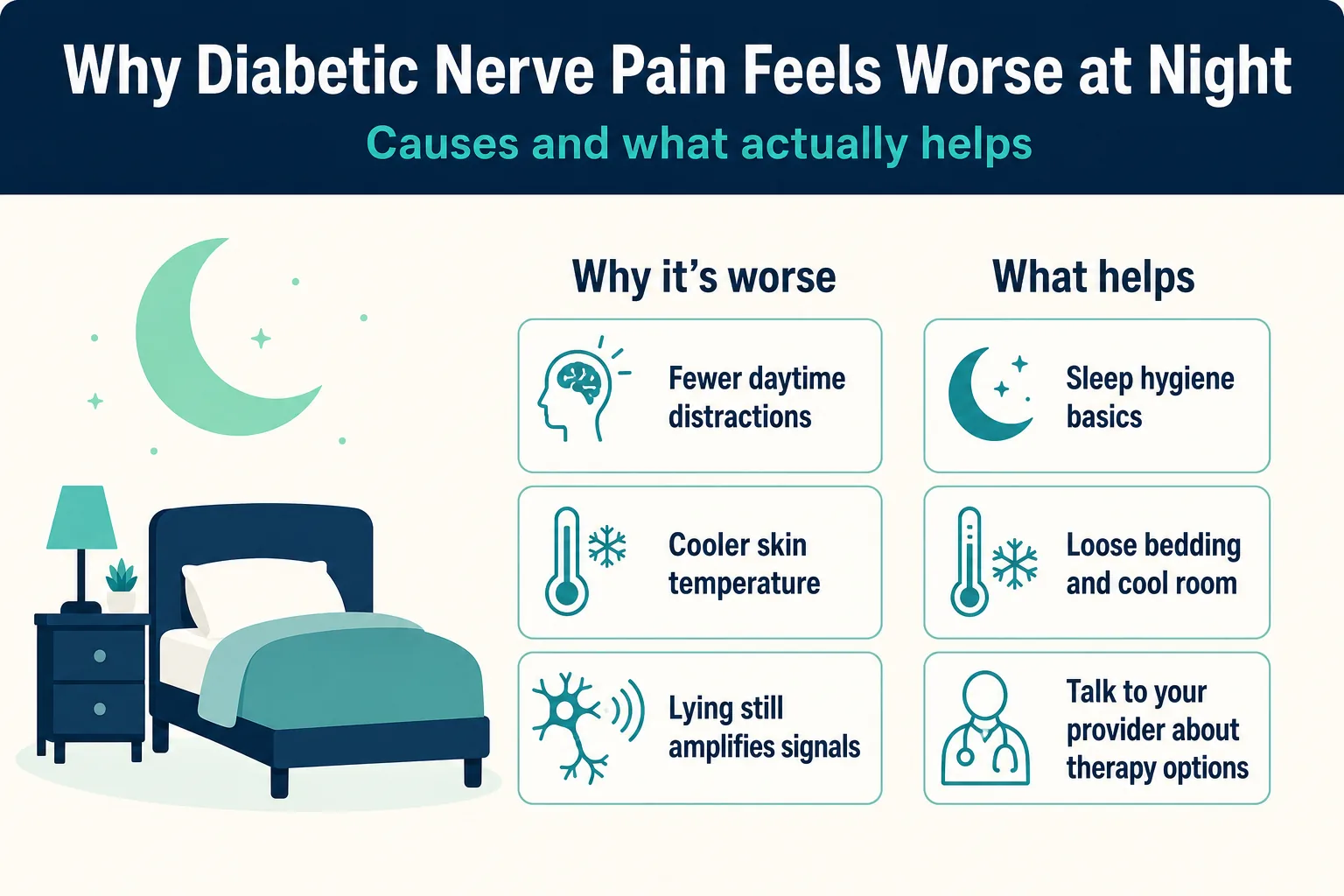
During your waking hours, your brain is a whirlwind of activity. It processes sights, sounds, conversations, tasks, and countless other sensory inputs. This constant stream of information competes for your brain's attention. Pain signals from your nerves are just one of many signals the brain is receiving. This creates a distraction effect, where the pain can feel less prominent because your focus is elsewhere. When you lie down to sleep, these external distractions fade away. The room is dark, the house is quiet, and your mind is no longer occupied with the day's events. In this stillness, the pain signals have no competition. They can move from the background to the foreground of your awareness, seeming much more intense and demanding your full attention.
Changes in Body Temperature
Your body's circadian rhythm, or internal clock, governs your sleep-wake cycle. As part of this natural process, your core body temperature begins to drop in the evening to prepare you for sleep. For most people, this is a subtle and unnoticed change. However, for individuals with neuropathy, the peripheral nerves are already damaged and hypersensitive. This slight drop in temperature can be misinterpreted by these sensitive nerves as a painful stimulus, leading to increased sensations of cold, burning, or tingling in the extremities.
Shifts in Circulation and Pressure
When you are active during the day, walking and moving around, your leg muscles help pump blood through your body. When you lie down for a prolonged period, your circulatory dynamics change. For individuals with diabetes, who may already have compromised blood flow, these subtle shifts can potentially impact the health and function of peripheral nerves. Additionally, the simple pressure of your body on the mattress or the weight of blankets on your feet can be enough to trigger pain in hypersensitive skin and nerves.
Neural Sensitization
Living with chronic pain can change the nervous system itself. Over time, persistently firing nerves can become more efficient at transmitting pain signals, a process known as sensitization. Your nervous system essentially becomes hyper-reactive, operating on high alert. This means that a stimulus that would normally not be painful, like the touch of a bedsheet, can be perceived as intensely painful. The quiet nighttime environment, free from other inputs, may allow this sensitized state to become more pronounced.
Strategies for Managing Nighttime Nerve Pain
While the reasons for increased nighttime pain are complex, the good news is that there are many proactive steps you can take to mitigate the symptoms and improve your chances of a good night's sleep.
Prioritize Excellent Sleep Hygiene
- Establish a consistent schedule. Go to bed and wake up at roughly the same time every day, even on weekends.
- Create a relaxing bedtime ritual. An hour before you plan to sleep, engage in calming activities like reading, listening to calm music, gentle stretching, or taking a warm bath.
- Optimize your bedroom environment. Keep it dark, quiet, and cool. Consider blackout curtains, a white noise machine, or a fan.
- Power down your screens at least 60 to 90 minutes before bed. Blue light suppresses melatonin.
- Avoid caffeine, nicotine, alcohol, and large meals in the hours leading up to bedtime.
Adjust Your Sleep Environment
- Choose a foot-friendly position. For some, slightly elevating the feet with a pillow can improve comfort.
- Select soft, breathable bedding. Cotton or bamboo are less likely to irritate sensitive skin than synthetics.
- Lift the weight of blankets. A simple bed cradle holds covers up off your feet and legs, which can be a major relief for people with allodynia.
Focus on Overnight Blood Glucose Control
Stable blood sugar is foundational to nerve health. Significant swings in glucose levels overnight, either too high or too low, can exacerbate nerve pain and disrupt sleep. Work closely with your healthcare provider to understand and manage your overnight blood glucose patterns. This may involve reviewing your diet, the timing of your meals or snacks, or adjustments to your diabetes medications.
When Lifestyle Changes Are Not Enough
It is essential to implement the lifestyle strategies above, but for many people with moderate to severe PDN, they may not be enough to control the pain. When your sleep is consistently disrupted and your quality of life is suffering, it is time to have a direct conversation with your healthcare provider about escalating your treatment.
Your provider can review your current medications. Sometimes the timing of an oral medication for nerve pain can be adjusted to provide more coverage during the nighttime hours. However, you should never alter your medication schedule without explicit direction from your prescribing provider.
If first-line treatments are failing, it may be time to discuss advanced therapies like neuromodulation, which uses targeted electrical stimulation to interrupt or modify pain signals before they reach the brain.
An Advanced Option for Lasting Relief: The NS100 System
For patients who have not found adequate relief from conventional treatments, the NS100 by NeuroDynamics Global offers a new approach. The NS100 is a minimally invasive, non-opioid peripheral nerve stimulation therapy designed specifically for painful diabetic neuropathy.
The therapy involves a simple procedure performed in your provider's office. After applying topical anesthesia to ensure your comfort, a very thin, flexible wire called a lead is placed under the skin near the specific nerves in your lower leg or foot that are causing the pain.
This lead is connected to a small, wearable stimulator. For approximately 20 days, the device delivers gentle electrical pulses designed to calm the overactive nerves and reduce the pain signals being sent to your brain. After the treatment period is complete, the lead is easily removed.
Published clinical evidence has shown that this short-term stimulation can provide significant and lasting pain relief for many months after the therapy is finished.
Taking the Next Step Towards Quieter Nights
Chronic nighttime nerve pain is not something you have to simply endure. It is a real and treatable medical issue. If your current treatment plan is not providing the relief you need to sleep soundly, talk to your healthcare provider to discuss all your options.
To learn more about how the NS100 system is helping people manage painful diabetic neuropathy, contact NeuroDynamics Global to learn more.
Important medical disclaimer. This content is for general informational and educational purposes only and is not medical advice, diagnosis, or treatment. It does not establish a physician–patient relationship. Always consult a qualified healthcare provider before starting, stopping, or changing any medication or therapy.
About NS100 by NeuroDynamics Global. NS100 is an FDA-cleared Class II peripheral nerve stimulation medical device for chronic pain associated with painful diabetic neuropathy. Use of NS100 requires evaluation and prescription by a qualified healthcare provider. As with any medical device, NS100 carries potential risks; your provider will review indications, contraindications, and possible side effects with you.
Results vary. Individual results and experiences vary from patient to patient. No specific outcome is guaranteed. Coverage and reimbursement are payer- and plan-specific.
Want to learn more?
Talk to your healthcare provider or contact NeuroDynamics Global today.