Can Diabetic Neuropathy Be Reversed? What Patients Should Know
In brief
Patients newly diagnosed with diabetic neuropathy almost always ask the same question: can it be reversed? Here is an honest answer, and what you can do to slow progression and reduce pain.
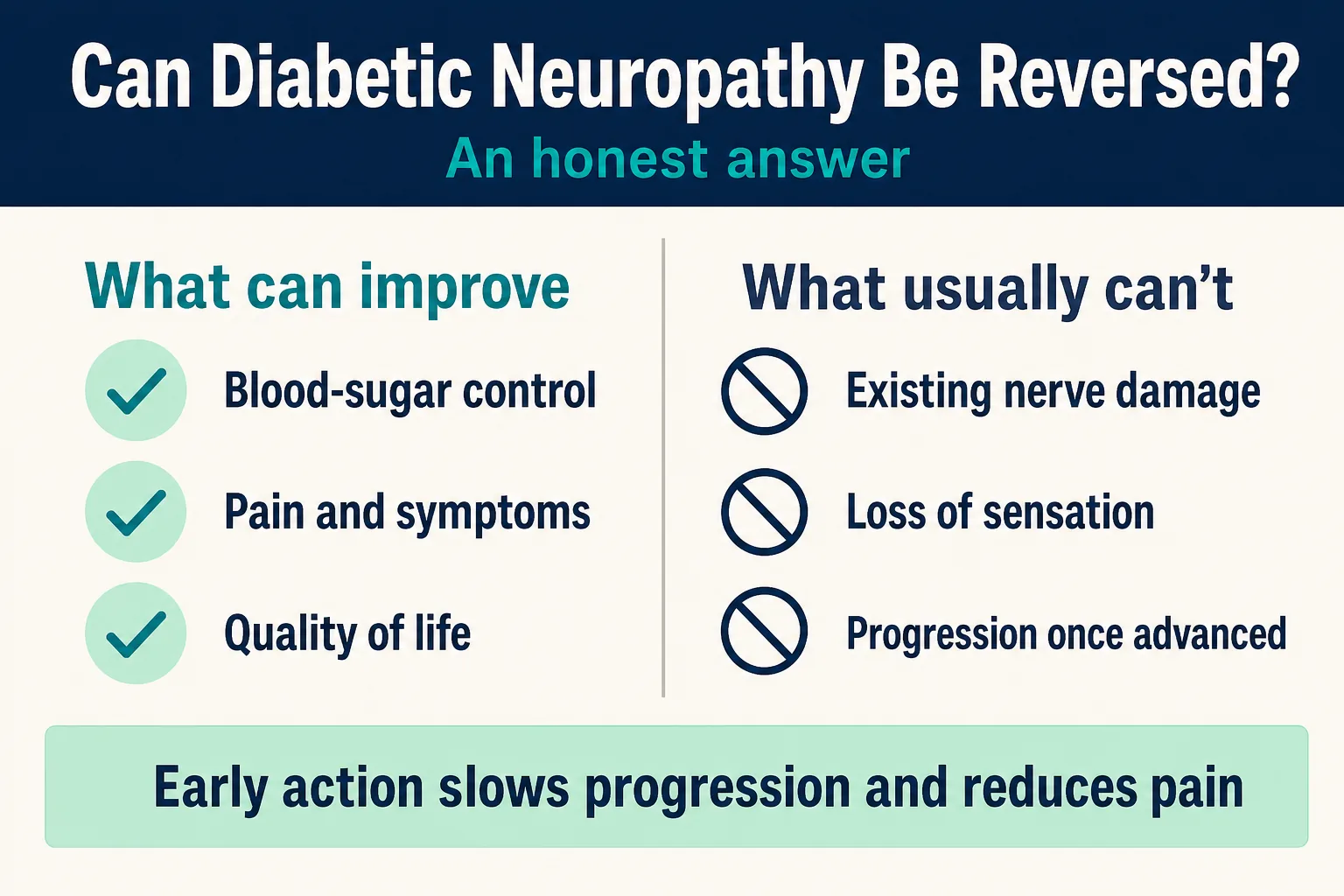
The honest answer
Diabetic neuropathy is generally considered a progressive condition. Once nerve fibers are damaged by long-term high blood glucose, that specific damage usually cannot be fully reversed. Anyone promising a complete "cure" for established diabetic nerve damage is overstating what the science supports.
The more useful question is not "can it be reversed?" but "can I slow or stop the progression, and meaningfully reduce my pain?" For most patients, the answer to both is yes.
What we know about nerve repair
Peripheral nerves do have some capacity to repair themselves, but only under the right conditions:
- Blood glucose is well controlled
- Other risk factors (blood pressure, cholesterol, smoking) are addressed
- Nerves are not subjected to ongoing metabolic stress
- Damage is caught relatively early
Even in this best case, repair is partial and slow. Patients who are years into uncontrolled diabetes and significant nerve loss should not expect their feet to "feel normal" again. They can, however, often expect meaningful improvement in pain and function.
What you can realistically change
Tighter glucose control
The single most important factor in slowing progression is consistent blood glucose management. This is not glamorous, but the evidence is clear: better long-term glucose control reduces the rate at which neuropathy worsens.
Foot care and protection
Daily foot inspection, well-fitting protective footwear, and prompt treatment of any wound are essential — especially once sensation has begun to decrease.
Treating the pain effectively
Pain is its own problem. Even if nerves themselves cannot be regrown, the pain those nerves generate can often be reduced substantially. This is where treatment choice matters most.
Pain treatment options worth discussing
First-line medications
Gabapentin, pregabalin, and duloxetine are usually tried first. They help some patients. Side effects are common, and many patients ultimately need to discuss alternatives. See our [patient guide to gabapentin alternatives](/resources/gabapentin-alternatives-diabetic-neuropathy-patient-guide).
Topical therapies
A high-concentration capsaicin patch and other topical options are non-systemic and may be combined with other approaches.
Neuromodulation
For patients who have not found adequate relief from medications, neuromodulation can be discussed. NS100 by NeuroDynamics Global is an FDA-cleared, minimally invasive 20-day peripheral nerve stimulation protocol for chronic pain associated with painful diabetic neuropathy. It does not reverse nerve damage, but it offers many patients a meaningful reduction in pain without opioids and without a permanent implant. Learn more on the [NS100 therapy page](/ns100) or take our quick [candidate screener](/am-i-a-candidate).
What to ask your doctor
- How advanced is my neuropathy, and what does that mean for treatment?
- What is the realistic goal of treatment — reversal, stabilization, or pain relief?
- Have I tried first-line medications long enough at adequate doses?
- Am I a candidate for a non-opioid, non-pharmacologic option?
- What is the plan for foot care to prevent complications?
Bottom line
Established diabetic neuropathy is generally not reversible, but it is highly treatable. Tight glucose control slows progression; effective pain treatment — including non-opioid neuromodulation when medications fall short — can substantially improve quality of life.
This article is educational and is not medical advice. Results vary. Always discuss diagnosis and treatment with your clinician.
Important medical disclaimer. This content is for general informational and educational purposes only and is not medical advice, diagnosis, or treatment. It does not establish a physician–patient relationship. Always consult a qualified healthcare provider before starting, stopping, or changing any medication or therapy.
About NS100 by NeuroDynamics Global. NS100 is an FDA-cleared Class II peripheral nerve stimulation medical device for chronic pain associated with painful diabetic neuropathy. Use of NS100 requires evaluation and prescription by a qualified healthcare provider. As with any medical device, NS100 carries potential risks; your provider will review indications, contraindications, and possible side effects with you.
Results vary. Individual results and experiences vary from patient to patient. No specific outcome is guaranteed. Coverage and reimbursement are payer- and plan-specific.
Want to learn more?
Talk to your healthcare provider or contact NeuroDynamics Global today.