Burning Feet from Diabetes: Causes, Warning Signs, and Treatment Options
In brief
Burning, tingling, or stabbing pain in the feet is one of the most common signs of painful diabetic neuropathy. Here is what causes it, when to act, and the treatment options worth discussing with your doctor.
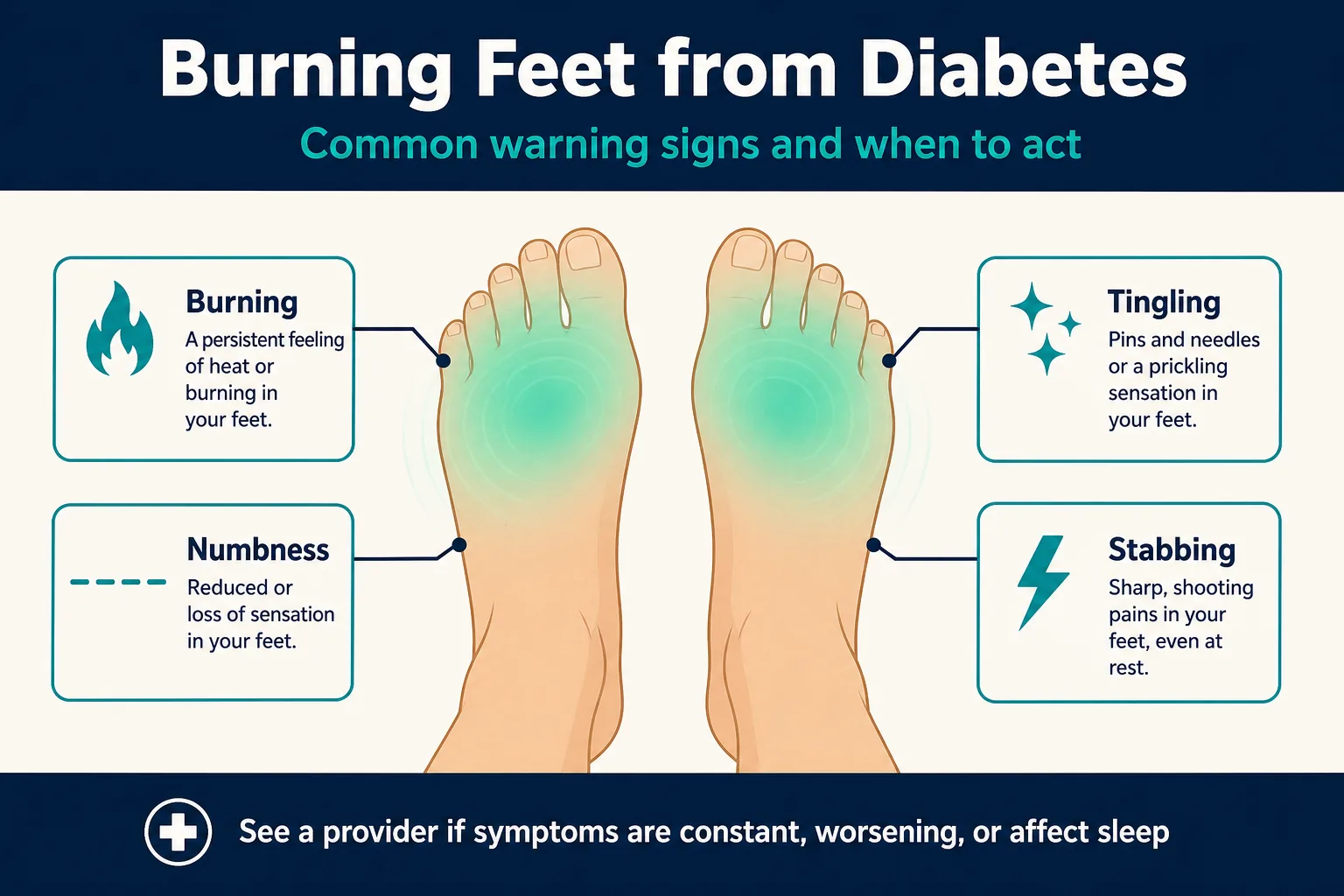
Why your feet burn when you have diabetes
If you have diabetes and your feet feel hot, prickly, or like they are on fire — especially at night — you are not imagining it. Burning feet are one of the earliest and most common symptoms of [painful diabetic neuropathy (PDN)](/resources/what-is-diabetic-neuropathy), a nerve condition that affects roughly half of people living with diabetes over time.
Persistently high blood glucose damages the small nerve fibers that carry sensation from your feet back to your spinal cord and brain. As those nerves become irritated and misfire, your brain interprets the signals as burning, tingling, stabbing, or electric-shock pain — even when nothing is touching your skin.
Warning signs you should not ignore
Burning feet from diabetes rarely stay the same. Without treatment, the symptoms typically progress. For a broader overview of how this condition develops and is diagnosed, see our guide to [what diabetic neuropathy is](/resources/what-is-diabetic-neuropathy). Pay attention if you notice any of the following:
- Burning, tingling, or pins-and-needles pain that gets worse at night
- Sharp, stabbing, or electric-shock-like pain in the feet or toes
- Numbness, loss of sensation, or feeling like you are walking on cotton
- Cold-feeling feet that are actually warm to the touch
- Loss of balance or unsteady walking
- Sores, blisters, or wounds on the feet that you did not feel develop
Numbness combined with new wounds is especially urgent. Diabetic foot wounds can progress to serious complications quickly when nerves are not signaling pain.
How burning feet from diabetes are treated
Treatment usually starts with the basics: tighter glucose control, foot care, and first-line medications. (New to the condition? Read our primer on [what diabetic neuropathy is and how it's diagnosed](/resources/what-is-diabetic-neuropathy) before reviewing options below.) From there, options expand if symptoms persist.
Lifestyle and medical management
- Improving blood glucose control
- Daily foot inspection and protective footwear
- Treating other risk factors such as high blood pressure and high cholesterol
Medications
First-line oral medications include gabapentin, pregabalin, and duloxetine. Topical options such as a high-concentration capsaicin patch may also be considered. These options help some patients but not all, and side effects are common. Our [patient guide to gabapentin alternatives](/resources/gabapentin-alternatives-diabetic-neuropathy-patient-guide) explains how to talk with your doctor about other choices.
Neuromodulation
When medications do not provide adequate relief, neuromodulation may be discussed. NS100 by NeuroDynamics Global is an FDA-cleared, minimally invasive peripheral nerve stimulation therapy delivered over a 20-day in-office protocol for chronic pain associated with painful diabetic neuropathy. Learn more on the [NS100 therapy page](/ns100) or take our short [educational candidate screener](/am-i-a-candidate).
When to see a doctor
You should make an appointment with your healthcare team if burning feet from diabetes (a hallmark symptom of [diabetic neuropathy](/resources/what-is-diabetic-neuropathy)):
- Are interfering with sleep, walking, or daily activities
- Have lasted more than a few weeks
- Are accompanied by numbness, foot wounds, or balance changes
- Have not improved on first-line medications
Bottom line
Burning feet from diabetes are a treatable symptom, not something to live with quietly. If you are still learning about the condition itself, start with our overview of [diabetic neuropathy symptoms, causes, and treatment options](/resources/what-is-diabetic-neuropathy). Early evaluation, tighter glucose control, and an honest conversation about treatment options — including non-opioid neuromodulation — give most patients the best chance of meaningful relief.
This article is educational and is not medical advice. Results vary. Always discuss diagnosis and treatment with your clinician.
Important medical disclaimer. This content is for general informational and educational purposes only and is not medical advice, diagnosis, or treatment. It does not establish a physician–patient relationship. Always consult a qualified healthcare provider before starting, stopping, or changing any medication or therapy.
About NS100 by NeuroDynamics Global. NS100 is an FDA-cleared Class II peripheral nerve stimulation medical device for chronic pain associated with painful diabetic neuropathy. Use of NS100 requires evaluation and prescription by a qualified healthcare provider. As with any medical device, NS100 carries potential risks; your provider will review indications, contraindications, and possible side effects with you.
Results vary. Individual results and experiences vary from patient to patient. No specific outcome is guaranteed. Coverage and reimbursement are payer- and plan-specific.
Want to learn more?
Talk to your healthcare provider or contact NeuroDynamics Global today.